About Project CANVAS:
Project CANVAS (formerly the AIMaS—Artificial Intelligence + Music+ Arts + Science Curriculum, originally developed at University of Virginia’s School of Education) is a multi-site research initiative and educational intervention designed to explore the intersection of Physical AI, robotics, and human artistry,. Based at the Center for Science Engagement, along with multiple university and organizational partners, the program involves a global network of collaborators, including the Boys & Girls Club of America (Chicago branch lead), the Brockton Public Library Makerspace, MassArt, and STEM centers in Beijing and Shanghai,. The intervention is primarily held at the Brockton Public Library for a diverse group of students, including those from the South Shore, MA-based Dessalines STEAM Academy and the general community, ranging from kindergarten to 11th grade,,.
Core Objectives and Framework
The project’s primary goal is to help students “humanize” AI and understand how it moves from a computer screen into the physical world. By treating AI as a creative tool similar to a paintbrush, the intervention aims to reduce technology-related anxiety and build self-efficacy and literacy for future careers,,. The curriculum is anchored by “Five Big Ideas” (based on the AI4K12 educational standards):
- Perception: How machines use sensors (eyes and ears) to identify objects.
- Representation & Reasoning: How AI maintains internal “maps” or models to solve problems.
- Learning: The process of identifying patterns from vast datasets, similar to how a baby learns,.
- Natural Interaction: Designing AI that can interact with humans naturally, such as through conversation or a handshake.
- Societal Impact: Discussing the ethical implications and broader consequences of AI technology.
Technical and Artistic Intervention
The intervention is designed as a hands-on workshop that can range from a 75-minute introductory lesson to a comprehensive four-hour workshop. Key activities include:
- Building “Artbots”: Students construct small, motor-driven robots using cups, markers, and basic electronics,. These bots produce random geometric patterns, helping students distinguish between simple mechanical movement and complex AI code.
- Industrial Robot Training: Participants work directly with a 6-axis industrial robot arm (such as the Ufactory Painterbot),. They use waypoint recording (or training) to physically move the arm and record specific points in 3D space, which the robot then plays back with machine precision,.
- Creating Hybrid AI Art: In this collaborative phase, students paint an initial layer on a 9×12 canvas with acrylics. They then use prompt engineering and tools like the Gemini API as “thought partners” to generate additional layers,. The industrial robot arm then paints these AI-generated designs directly onto the student’s canvas, creating a joint human-machine masterpiece,.
Outcomes and Presentation
Throughout the sessions, students engage in deep dives into how AI operates using Neural Networks—systems inspired by the human brain—to classify information (Predictive AI) or create new content (Generative AI),. The final student works, including the motor-driven Artbots and the Hybrid AI canvases, are presented in a gallery format at the Brockton Public Library,. These displays often include QR codes that allow viewers to watch videos of the specific training and creative process behind each piece. Achievements and additional resources are also archived on the project website, engagescience.org/canvas.
Explainer Video – Check out this 8 minute intro / primer video about Project CANVAS to learn more about why we created this project:
Video: Philosophical Rationale Behind the CANVAS Advanced Course
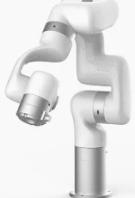
Video Example – Stylized Portrait: here is a brief video showing an example of the CANVAS Ufactory robot Xarm at work:
Video Example: Impressionist Landscape/Trees (In vertical / tiktok / shorts format) –
Video Example: How we do collaborative human-robot hybrid painting artwork:
Facilitator’s Guide & Collaboration
Please feel free to use and supplement our CANVAS-Advanced (AI-Art Ethics & Concept Intro) facilitator’s guide, appropriate for students on the upper end of the K-12 grade range. Note that we welcome collaboration, and would be happy to share the latest PPT’s, handouts, codebase, and other resources, for those organizations willing to partner and help to scale the CANVAS concept. Please reach out to us via our contact page. Thanks for your interest!
Behind-the-Scenes – A look at our recent CANVAS interventions in Brockton’s public library (activities include artbot creation, followed by robot waypoint recording and hybrid human-machine art creation):
FUNDING: This project is funded by a 2026 organizational grant by the Mass Cultural Council and support from the Brockton Public Library
FOR PARTICIPANTS: Here is the link to the in-person student workshop resources page to be used during class
Project CANVAS is a research and curriculum project, developed by the Massachusetts educational non-profit, the Center for Science Engagement